
Bone-anchored maxillary expansion, built digitally.
True skeletal widening for adolescents and adults — designed from CBCT, anchored to bone, and metal 3D-printed for a precise, repeatable fit.
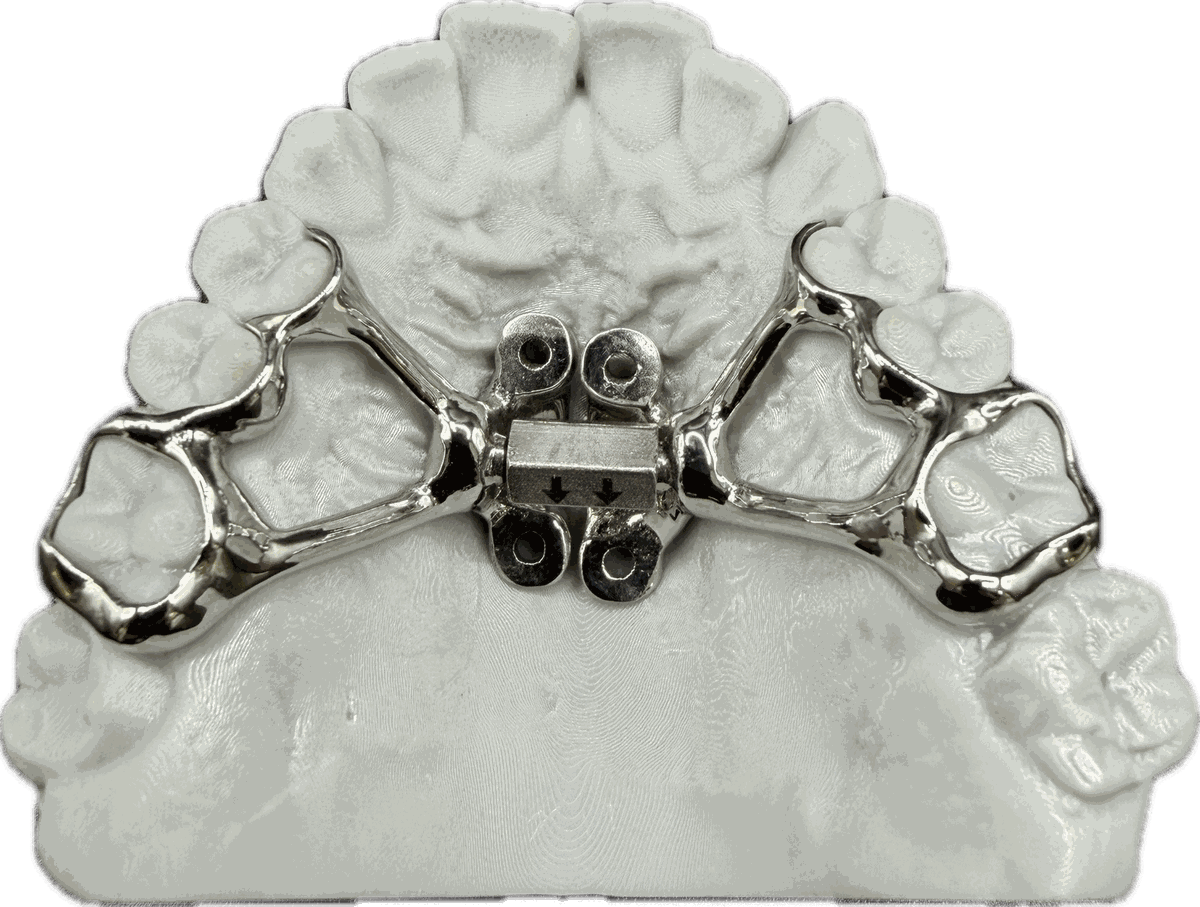
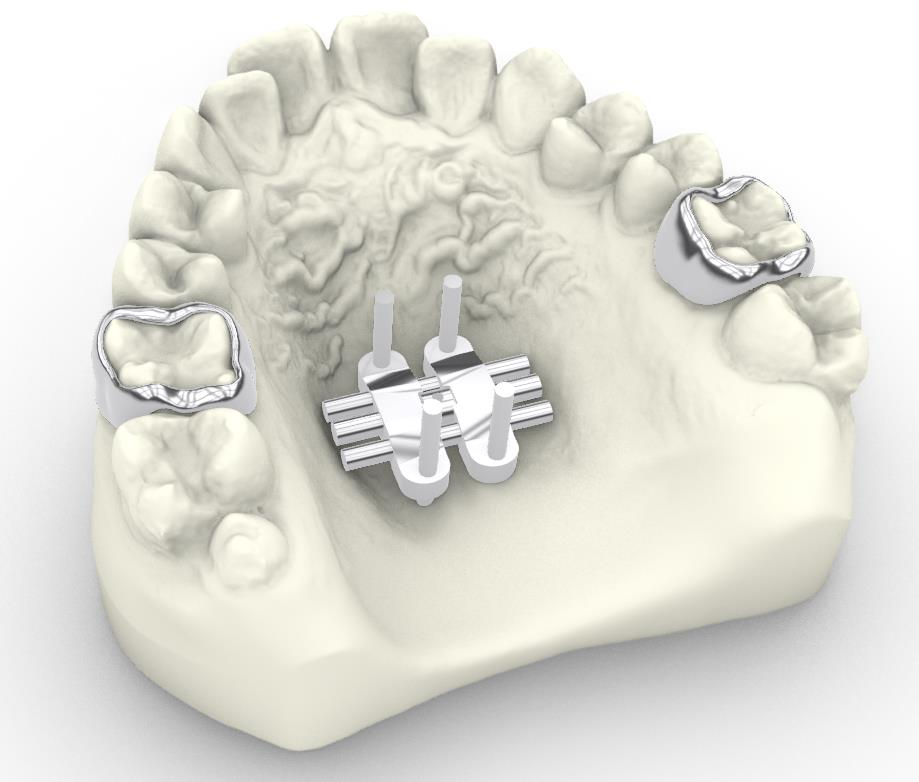
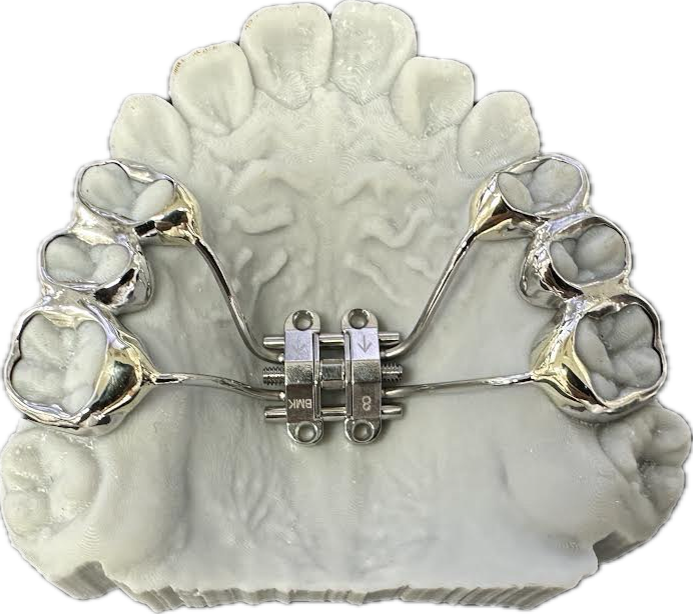
Three ways to expand — by how force reaches the bone
The right appliance depends on the patient's age and the maturity of the midpalatal suture, assessed from CBCT. We make all three and help you choose.
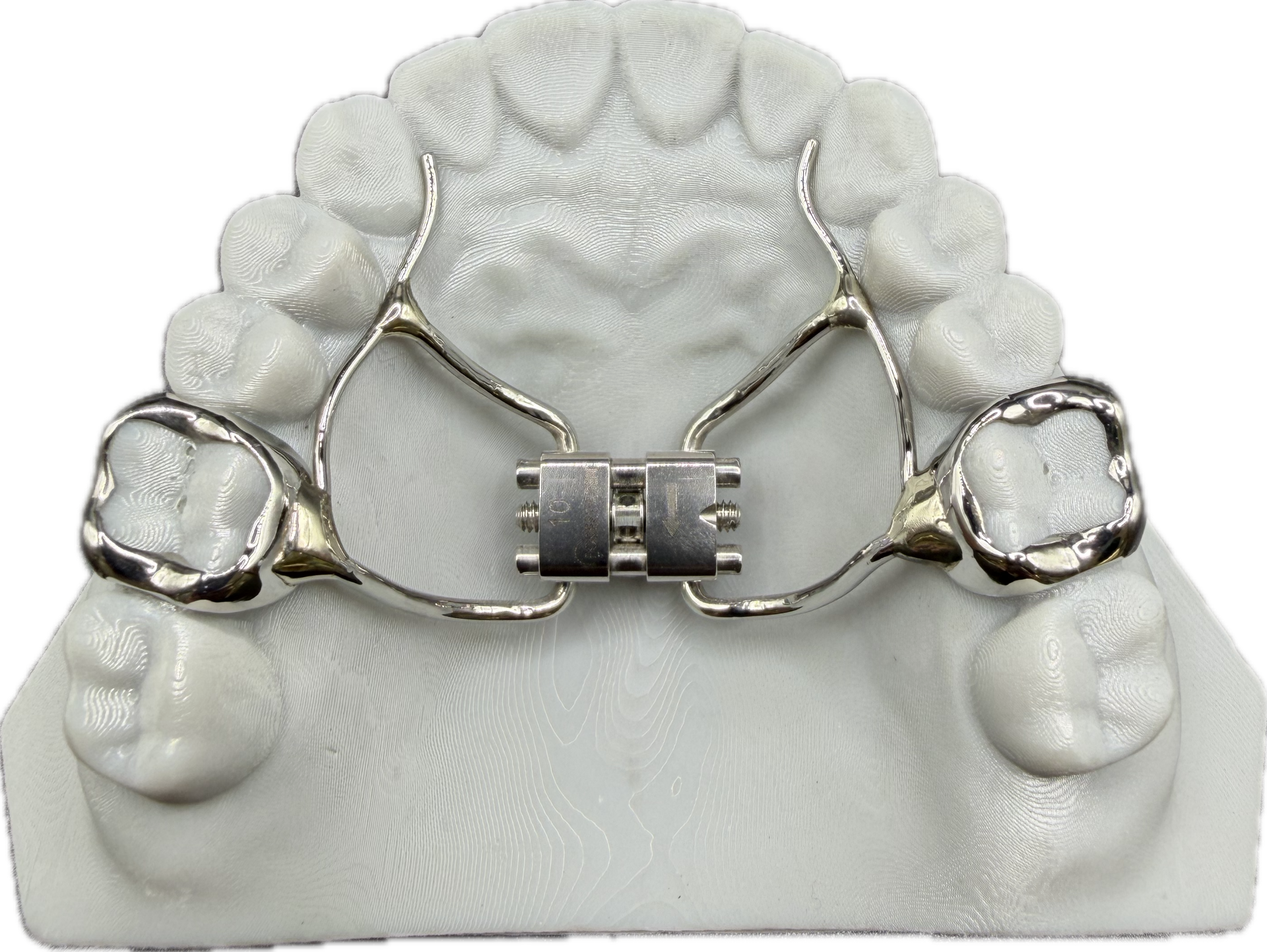
RPE / Hyrax
Anchored entirely to the teeth. Force runs through the dentition, so expansion comes with more dental tipping and buccal bone strain.
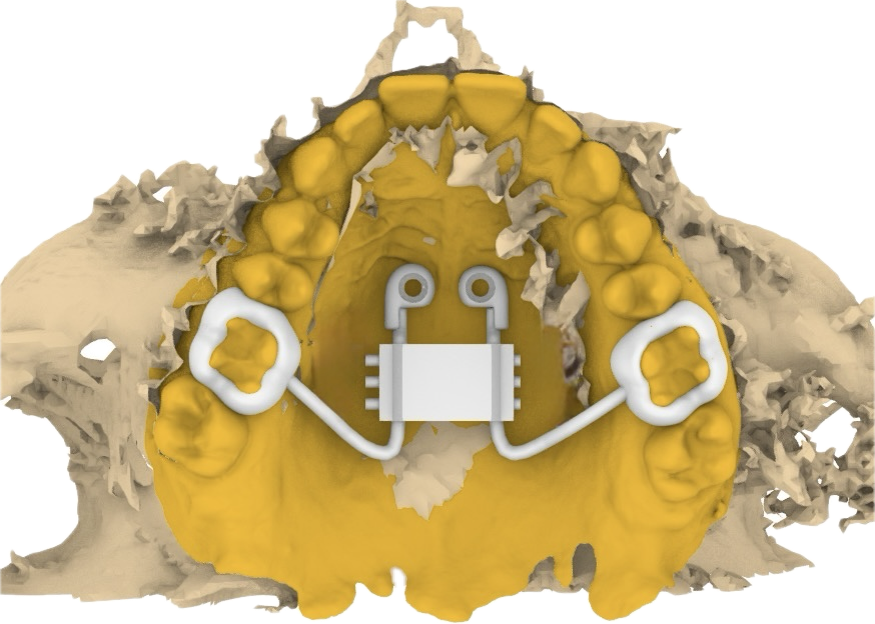
Hybrid Hyrax
Two anterior mini-implants and molar bands share the load, for a balanced split of skeletal and dental movement with moderate control over tipping.
MSE
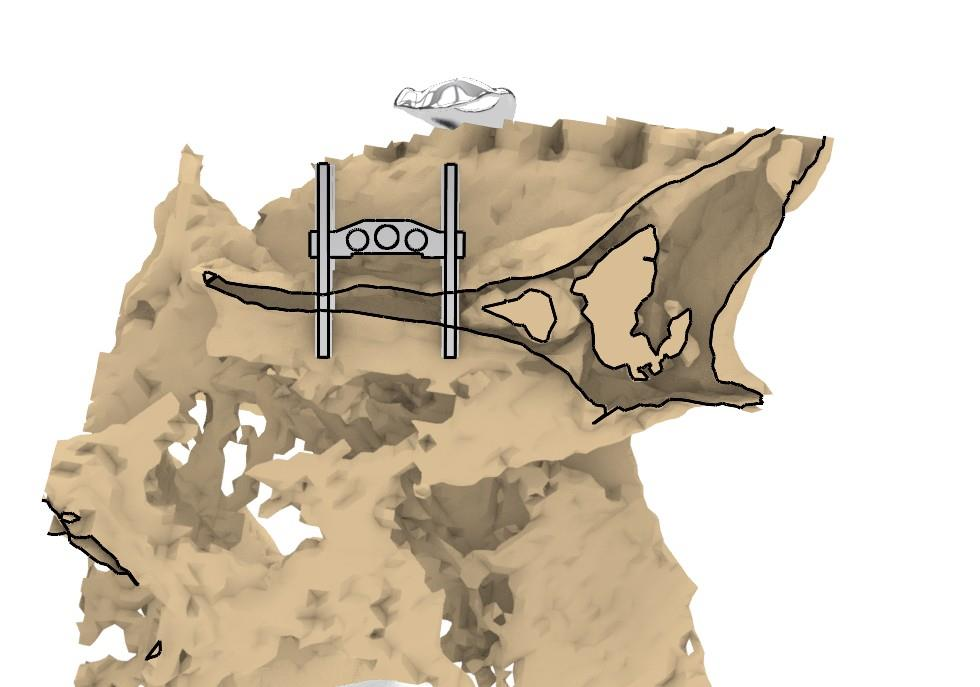
Anchored primarily to bone through four mini-implants set in the dense posterior palate, engaging both cortices for true skeletal separation with minimal tipping — with molar caps for added stability.
Anchored to bone, across both cortices
Our MARPE is the Maxillary Skeletal Expander (MSE) anchored with BioMaterials Korea (BMK) TADs. Placing four screws bicortically — through the palatal and nasal-floor cortices — drives parallel suture opening rather than dental tipping. Screw type and length are selected from each patient's CBCT.
Material: Ti-6Al-4V (grade V titanium). Accessories: MSE handle driver, starter kit. Springs / FM hooks on request.
More true expansion, fewer side effects
Real skeletal change
Direct bone loading separates the suture instead of tipping teeth outward.
Works in adults
Bicortical anchorage expands mature, fused sutures — often avoiding surgery.
Protects the dentition
Less buccal tipping and reduced buccal bone loss versus tooth-borne devices.
Airway benefit
Widening the maxilla can increase nasal-cavity dimensions.
From CBCT to a printed appliance
A fully digital pipeline keeps placement precise and turnaround fast.
Send a scan
Upload CBCT and an intraoral scan or impression through EasyRx.
Plan the TADs
We position screws in the densest posterior palate and design the frame to match.
Metal 3D print
The expander is metal 3D-printed for a rigid, hygienic, repeatable fit.
Deliver & place
A surgical guide seats the appliance at the planned position chairside.
SHU-lider metal-print family
Digitally designed, skeletally anchored appliances for molar movement and expansion — configurable to the case.
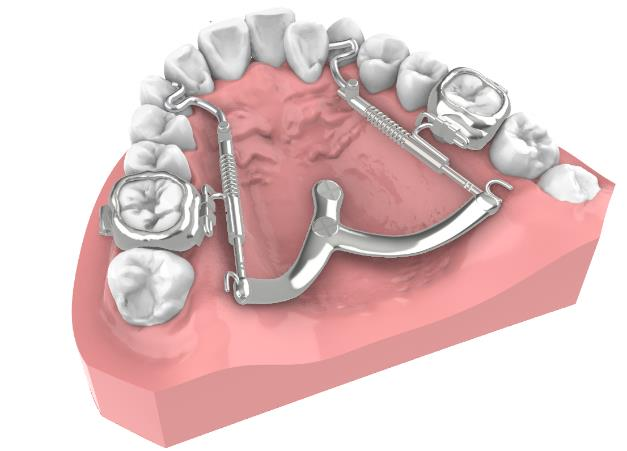

SHU-lider is a skeletally anchored, metal-printed appliance for controlled molar movement. Fixed to palatal mini-implants rather than to other teeth, it repositions upper molars without headgear, patient compliance, or anchorage loss. Open-coil springs deliver continuous force along a rigid printed guide, so molars translate bodily — with less tipping than wire-based distalizers.
The platform is configured per case: distalization to unlock Class II and create space, mesialization to close spaces, or heavy-duty skeletal expansion. Shown here seated on the working model with bilateral coil springs.
The family
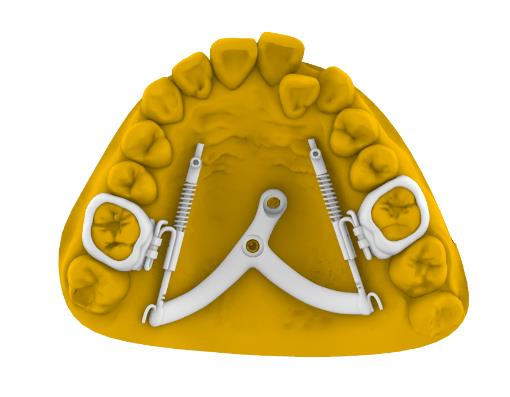
Molar distalization. Drives upper molars distally to unlock Class II, create space, or relieve crowding — skeletal anchorage, no compliance needed.
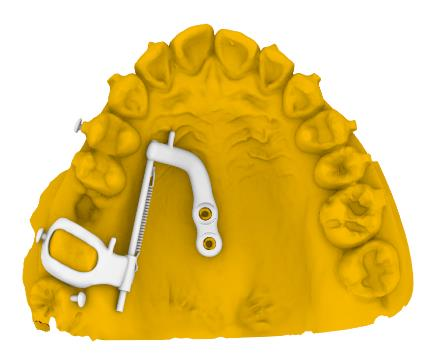
Molar mesialization. Moves molars forward to close spaces from missing or extracted teeth; self-adjusting lingual mechanism.
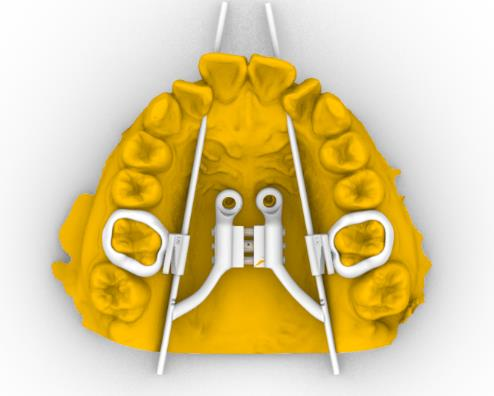
Extended, more rigid frame for greater anchorage and control in demanding movements.
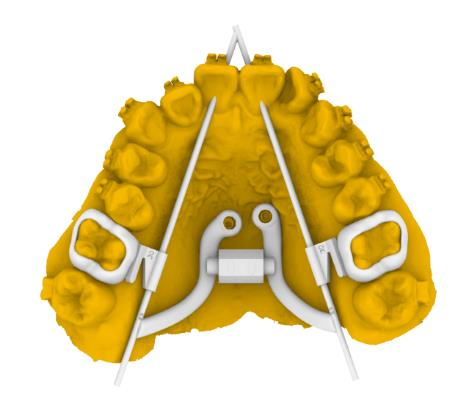
Heavy-duty SuperScrew configuration for skeletal expansion (MARPE / MSE).
The appliance library
MARPE / MSE expanders and the SHU-lider metal-print family — tap any image to enlarge.
Bring MARPE / MSE to your practice
Request turnaround and details, or start a case today through EasyRx — free for connected clinics.
- Log in to EasyRx and choose Submit Rx.
- Select ASO Hawaii from your labs.
- Attach the CBCT and STL / photos.
- Submit — we reply within 1 business day.